Diamond Grading 101: The 4Cs Plus Cut Quality, Fluorescence & Hidden Factors
Learn how the 4Cs of diamonds, cut quality, fluorescence, and other important factors affect a diamond’s appearance and value. Discover practical tips for comparing certified lab-grown diamonds and making informed buying decisions.
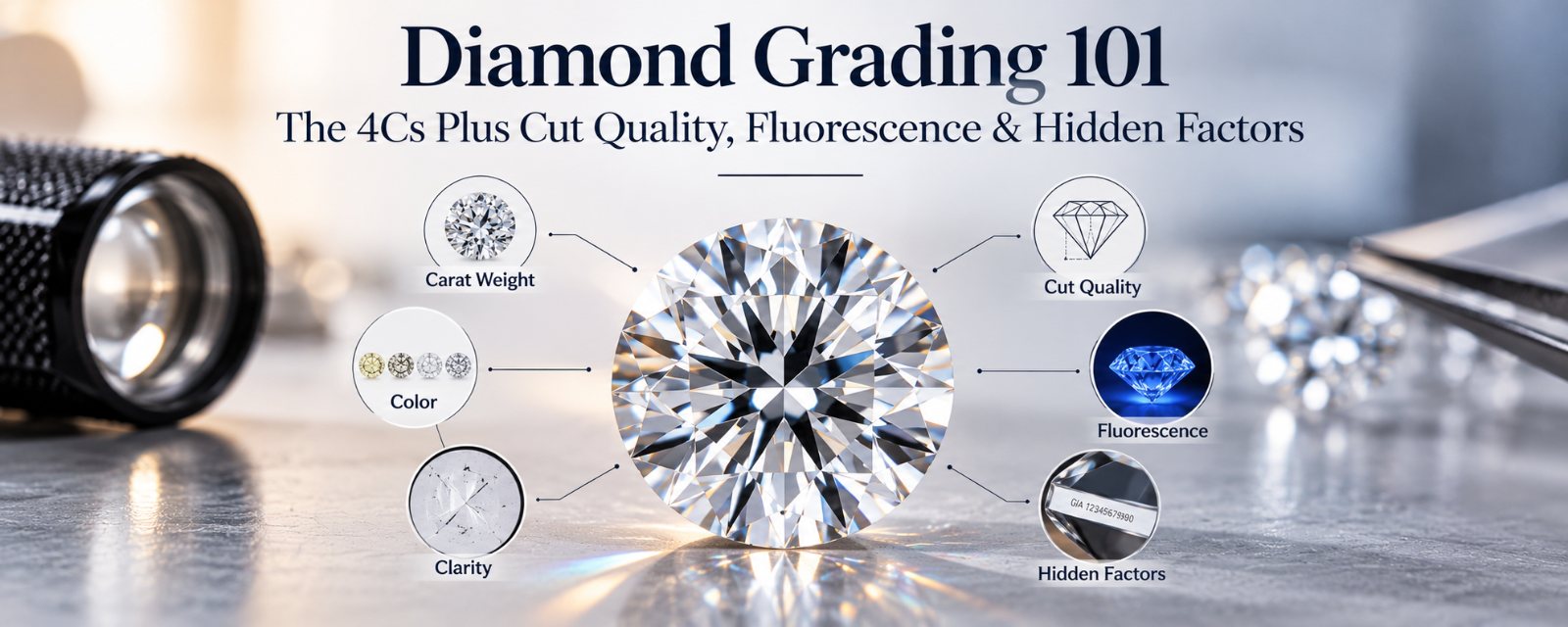
Buying a diamond is easier when you understand what makes one stone different from another. Color, clarity, carat weight, and cut all influence a diamond’s appearance and price. This diamond 4Cs guide explains these essential grading factors, along with fluorescence and other details worth checking before making a purchase. Whether you are choosing an engagement ring or exploring diamonds for fine jewelry, understanding these features can help you find the right balance between quality and budget.
Understanding the 4Cs of Diamonds
The 4Cs provide a standard way to evaluate diamonds. Each characteristic measures a different aspect of the stone, helping buyers compare options more accurately.
1. Cut Quality and Diamond Brilliance
Cut quality affects how a diamond handles light. A well-cut diamond can display bright reflections, colorful flashes, and attractive sparkle. Its proportions and facet arrangement influence how light travels through the stone.
Diamond cut should not be confused with shape. Round, oval, pear, and emerald describe shapes, while cut quality evaluates how effectively the facets interact with light.
When comparing diamonds, review the available cut grade, polish, symmetry, and proportions. A higher-quality cut can make a visible difference in the diamond’s overall appearance.
2. Color Grades and Visual Appearance
Diamond color grading generally follows the D-to-Z scale. D, E, and F are classified as colorless, while G, H, I, and J are considered near-colorless.
The difference between neighboring grades may be difficult to recognize without careful comparison. The diamond’s shape and setting can also influence how its color appears.
For engagement rings and other fine jewelry, compare diamonds under consistent lighting. Choosing the right color grade depends on personal preference, the setting, and your budget.
3. Clarity and Natural Characteristics
Clarity grading evaluates internal features called inclusions and surface characteristics known as blemishes. Grading laboratories consider their size, number, location, and visibility.
The clarity scale includes Flawless (FL), Internally Flawless (IF), VVS, VS, SI, and Included grades.
A diamond does not necessarily need the highest clarity grade to look beautiful. Some diamonds with VS or SI grades may appear clean to the unaided eye. Reviewing the grading report and examining the actual stone can help you determine whether its characteristics meet your expectations.
4. Carat Weight and Diamond Size
Carat weight measures a diamond’s weight, not its diameter. One carat equals 200 milligrams, but two diamonds with the same weight may look different in size.
Shape, depth, and proportions affect the visible dimensions. When comparing diamonds, review their measurements alongside carat weight to understand how large they may look in jewelry.
What Diamond Fluorescence Means
Fluorescence describes a diamond’s reaction to ultraviolet light. Blue is the most frequently observed fluorescence color, though other colors may also occur.
Fluorescence does not necessarily indicate low diamond quality. Many diamonds show little visible difference under ordinary lighting. Some stones with strong fluorescence may display a noticeable effect, so evaluating each diamond individually is important.
Before purchasing, review the fluorescence information on the grading report and compare the diamond under different lighting conditions when possible.
Hidden Factors That Influence Diamond Value
The 4Cs are important, but several additional characteristics help explain differences between diamonds.
- Polish and symmetry: These affect surface finish and facet alignment.
- Proportions: Table size, depth, and facet angles influence light performance.
- Measurements: Length and width help establish the visible size of a diamond.
- Certification: A grading report documents important diamond characteristics.
- Visual inspection: The diamond’s actual appearance can reveal differences that grades alone may not show.
Considering these factors together provides a more complete picture of diamond quality.
How to Choose the Right Diamond
Start with a clear budget and decide which features matter most to you. If sparkle is your main priority, focus on cut quality.
If size is more important, compare measurements instead of depending solely on carat weight.
Review color and clarity grades alongside the diamond’s actual appearance. At R S Sakhiya Diamond, buyers can explore certified lab-grown diamonds for different jewelry and business requirements.
A careful comparison of grading reports, proportions, and visual characteristics can help you select a diamond that suits your needs without paying extra for features that make little visible difference.
Conclusion
Understanding diamond grading makes it easier to compare stones and evaluate their value. This diamond 4Cs guide covers the essential grading factors while highlighting fluorescence, proportions, and other characteristics that deserve attention. By considering the complete picture rather than focusing on a single grade, you can make a more informed diamond-buying decision.
Frequently Asked Questions
1. What are the 4Cs of diamonds?
Cut, color, clarity, and carat weight.
2. Which factor affects diamond sparkle?
Cut quality has a major influence on brilliance.
3. What is the highest diamond color grade?
D is the highest grade on the standard D-to-Z scale.
4. Is VS clarity good for a diamond?
VS diamonds often provide a balance between clarity and value.
5. Does carat weight determine visible size?
No. Shape and proportions also affect apparent size.
6. Is fluorescence bad for diamonds?
No. Its effect varies between individual stones.
7. Why is diamond certification useful?
It documents the diamond’s assessed characteristics.
8. Can two diamonds with identical grades look different?
Yes. Proportions and other characteristics can affect appearance.
9. Are lab-grown diamonds graded using the 4Cs?
Yes. The same four grading factors apply to lab-grown diamonds.
10. What should I check before buying a diamond?
Review the 4Cs, grading report, proportions, fluorescence, and the diamond’s actual appearance.